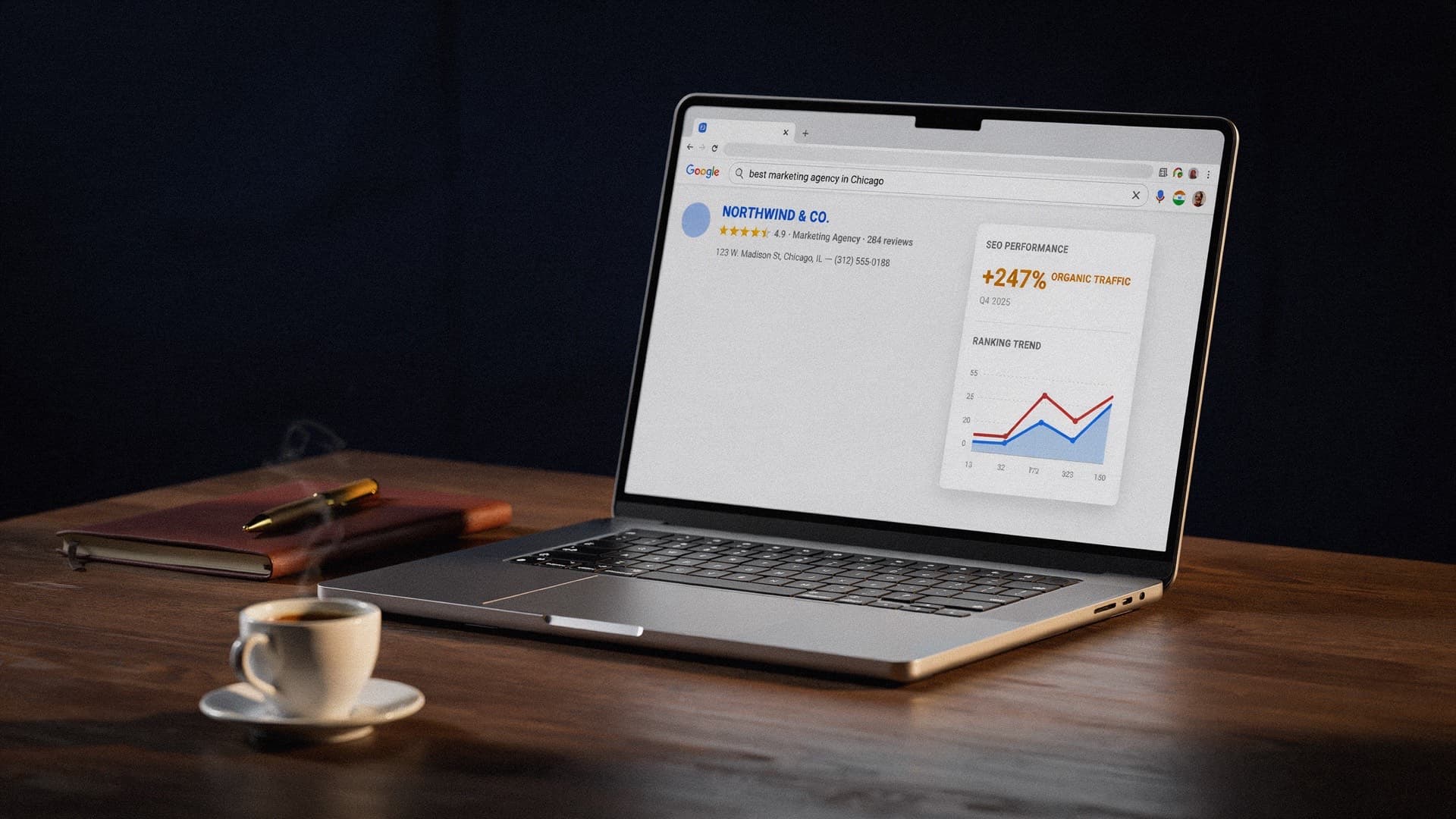
You've probably had the emails. “We noticed your website isn't ranking on Google. We can help.” Maybe someone at a networking event told you that you “need SEO”. Maybe an agency quoted you £800 a month for an SEO retainer and you had no idea whether that was reasonable or daylight robbery.
Let's cut through the noise. SEO is important. But not in the way most agencies sell it to you. And most small businesses are either paying for SEO they don't need, or missing out on SEO they should be getting for free as part of a properly built website. Here's the honest answer.
What SEO Actually Is (In Plain English)
SEO stands for Search Engine Optimisation. In plain English: it's everything you do to help your website appear higher on Google when someone searches for what you offer. That's it. Not rocket science. Not a dark art. Just a set of practices that make your site easier for Google to understand, trust, and recommend to searchers.
When someone searches “plumber Swindon” and your website appears at the top of the results, that's SEO working. When your competitor appears instead, that's their SEO being better than yours, or yours being non-existent.
The confusion comes because SEO is actually two distinct things, and most agencies blur the line between them to justify monthly retainers.
The Two Types of SEO
Type 1: Technical SEO (Built Into Your Website)
This is the foundation. It's the structural work that happens when your website is built. If it's done properly at build time. It doesn't need ongoing work. It includes:
- Meta titles and descriptions: The text that appears in Google search results. Every page needs a unique, keyword-optimised title and description that tells both Google and humans what the page is about.
- Schema markup (structured data): Code that tells Google exactly what your business is, where you're located, what you offer, your opening hours, and your reviews. This is what creates those rich snippets in search results.
- Page speed: Google uses Core Web Vitals as a ranking factor. A fast-loading site gets a ranking boost. A slow site gets penalised.
- Mobile-first design: Google indexes the mobile version of your site first. If your mobile experience is poor, your rankings suffer regardless of how good the desktop version looks.
- Clean, semantic HTML: Proper heading hierarchy (H1, H2, H3), meaningful element names, and structured content that Google can parse easily. Template builders and WordPress page builders produce messy, bloated HTML that confuses search engines.
- Image optimisation: Compressed images in modern formats (WebP), with descriptive alt text and lazy loading so they don't block the page render.
- XML sitemap and robots.txt: Files that tell Google what pages to crawl and how to navigate your site efficiently.
- Canonical URLs: Preventing duplicate content issues that dilute your ranking authority.
This type of SEO is a one-time job. Build it right, and it works indefinitely. It shouldn't cost you a monthly fee. It should be included in the build price.
Type 2: Ongoing SEO (Campaigns and Content)
This is the monthly work. It includes things like:
- Ongoing keyword research and content creation (blog posts, landing pages)
- Link building, getting other reputable websites to link to yours
- Competitor analysis and strategy adjustments
- Monthly reporting on rankings, traffic, and conversions
- Local citation building and management
- Google Business Profile optimisation
This type of SEO does require ongoing effort, and it's legitimate when you're competing for high-value, competitive keywords. The problem is that it's being sold to businesses that don't need it.
Why Most Small Businesses Get Ripped Off on SEO
Here's where it gets uncomfortable. The SEO industry has a transparency problem. A typical SEO retainer for a small business in the UK costs £500–£2,000 per month. That's £6,000–£24,000 per year. And what do you get?
- Monthly reports you don't understand. PDF documents full of graphs, rankings for keywords you didn't ask about, and impressions that may or may not translate into actual enquiries.
- Vague deliverables. “We optimised your on-page SEO” , but what does that actually mean? Did they change a meta title? Add an alt tag to an image? You're paying £1,000 a month and have no idea what's being done.
- Long contracts with no guaranteed results. 6–12 month minimum contracts, with the caveat that “SEO takes time” as the excuse for why nothing seems to be happening.
- Work that should have been done during the build. A lot of what SEO agencies charge monthly for, meta tags, schema, speed optimisation, mobile responsiveness, should have been built into your website from day one. If your website was built properly. You wouldn't need to pay someone to fix it afterwards.
The inconvenient truth: If your website was built with proper technical SEO. You wouldn't need to pay someone £500–£2,000 a month to retrospectively bolt it on.
What SEO Is Included in Every Simple Day Website
We don't charge for SEO separately. Every website we build includes the full suite of technical SEO as standard:
- Unique meta titles and descriptions for every page, keyword-optimised for your services and location.
- Schema markup (LocalBusiness, Service, FAQ) so Google understands exactly what your business is.
- Sub-1.5-second page loads: fast by default, not fixed with caching plugins.
- Mobile-first responsive design: built for phones first, not adapted afterwards.
- Clean, semantic HTML: proper heading structure, meaningful markup, no bloat.
- Optimised images in modern formats with lazy loading and descriptive alt text.
- XML sitemap and robots.txt configured and submitted to Google Search Console.
- Canonical URLs and proper internal linking structure.
- Open Graph and social meta tags so your pages look professional when shared on social media.
This isn't an add-on. It's not a premium package. It's the baseline. Because a website without SEO is like a shop without a sign on the door. It doesn't matter how good the inside looks if nobody can find it.
When You DO Need Ongoing SEO
There are legitimate cases where ongoing SEO investment makes sense:
- Competitive national keywords. If you're trying to rank for “best accounting software UK” or “cheap car insurance”, you're competing against companies with six-figure SEO budgets. You need ongoing content and link-building campaigns to have a chance.
- Large e-commerce sites. If you have hundreds or thousands of product pages, ongoing SEO is essential for managing product listings, category pages, seasonal content, and competitor monitoring.
- Content-heavy businesses. If content marketing is a core part of your strategy, publishing regular articles, guides, and resources to attract organic traffic. You need someone managing keyword research, content calendars, and performance analysis.
- Highly competitive local markets. If you're a solicitor in London or a dentist in Manchester, the local competition is fierce enough that ongoing SEO work can provide a meaningful edge.
When You DON'T Need Ongoing SEO
For the majority of small, local service businesses, ongoing SEO retainers are unnecessary if your website is built properly. You likely don't need a monthly SEO contract if:
- You're a local service business with a 5–10 page website targeting customers in your town or county. “Plumber Swindon” has far less competition than “plumber London”, proper technical SEO in the build is usually enough.
- Your target keywords are location-specific. Local search terms (“landscaper Wiltshire”, “electrician Swindon”) are far less competitive than national terms. A well-built site with proper local SEO can rank for these without ongoing campaigns.
- You don't need a content marketing strategy. If your business model doesn't require weekly blog posts to drive traffic (and most local service businesses don't). You don't need someone managing a content calendar.
- Your site is already technically sound. If the foundations are right , speed, mobile, schema, meta tags, clean code. You don't need someone charging £800 a month to maintain what should already be working.
Proof: Zero Ongoing SEO, #1 on Google
Our flagship case study, bbqpods.uk, demonstrates this perfectly:
- Built in 12 hours from a 15-page supplier PDF
- #1 on Google for “bbq pods uk” in 8 weeks
- 905 clicks and 7,024 impressions from organic search
- Visitors from 114 countries
- Zero ongoing SEO spend: no retainer, no agency, no monthly content
How? The technical SEO was built into the code from day one. Clean HTML. Proper schema. Fast load times. Optimised meta data. The site didn't need monthly maintenance to rank. It ranked because it was built correctly.
This doesn't mean ongoing SEO is never valuable. It means that for most local businesses with a properly built website, the technical SEO built into the site is enough to rank. The monthly retainer is for fixing problems that shouldn't exist.
Frequently Asked Questions
How long does SEO take to work?
For a new website with proper technical SEO. You can expect to see meaningful rankings within 4–12 weeks for local, low-competition keywords. National or highly competitive keywords can take 6–12 months. bbqpods.uk hit #1 in 8 weeks, which is fast but not unusual for a well-built site targeting a specific niche.
Can I do SEO myself?
The technical side? Probably not, unless you're a web developer. That should be handled during the build by whoever creates your website. But the local SEO basics , claiming your Google Business Profile, getting listed in directories, keeping your NAP consistent, collecting reviews, yes. You can absolutely do those yourself, and we'd encourage it.
Is SEO better than Google Ads?
They serve different purposes. Google Ads give you immediate visibility but stop the moment you stop paying. SEO builds over time and delivers free, ongoing traffic. For most small businesses, the best approach is to build a site with proper SEO (so you're getting organic traffic for free), and use Google Ads selectively for high-value campaigns or while your organic rankings are building.
How do I know if my SEO agency is actually doing anything?
Ask them three questions: (1) What specific work did you do this month? (2) What measurable results came from that work? (3) How does this translate into enquiries or revenue? If they can't answer clearly, or if the answers are vague (“we optimised your site”), you're probably paying for very little.
What's the difference between SEO and local SEO?
Local SEO focuses specifically on ranking for location-based searches (“dentist near me”, “builder Swindon”). It involves Google Business Profile, local citations, and location-specific content. General SEO is broader and targets national or global search terms. Most small businesses need local SEO, not general SEO, and local SEO is far more achievable without a monthly retainer.
The Bottom Line
Does your small business need SEO? Yes, the technical kind, built into your website. Does your small business need a £500–£2,000/month SEO retainer? Probably not, if your site is built properly.
The best investment isn't an ongoing SEO contract. It's a website that's built right the first time, with speed, mobile-first design, schema markup, optimised content, and clean code that search engines love. That's what every Simple Day website includes as standard. And you can read more about what that costs in our UK website pricing guide.
Want to see if your business needs a website upgrade? Take our 60-second quiz and we'll give you an honest answer, no hard sell, no jargon.